Fit First: Why One Tailoring Pass Beats a New Wardrobe
The highest-return move in a man's wardrobe isn't buying more — it's making what he already owns sit correctly on his frame.

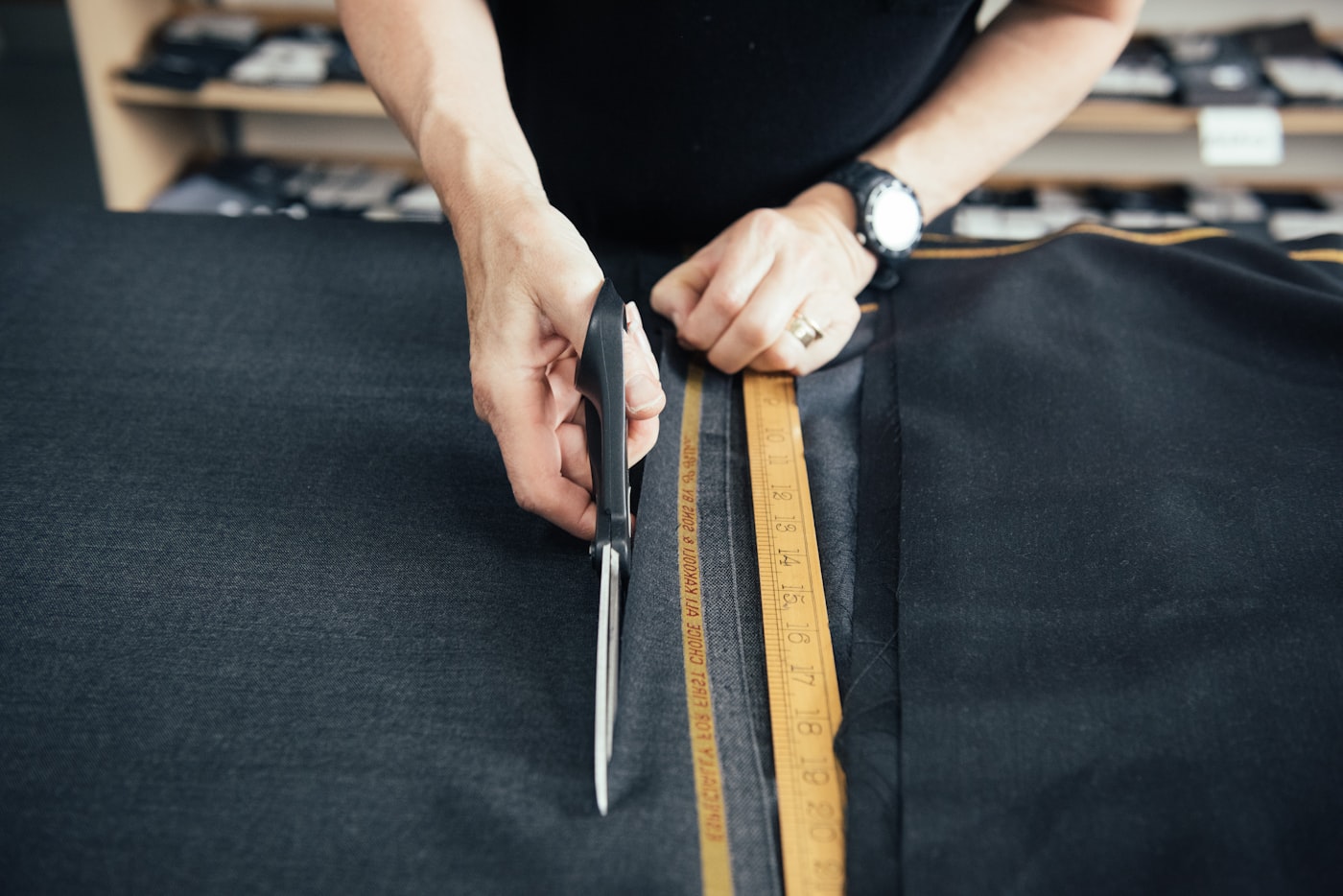
Two men stand at the same client dinner in suits from the same price bracket. One reads as the senior person in the room before he has said a word. The other reads as capable but junior — someone still proving it. Neither of them, and almost none of the people watching, could tell you why. The difference is rarely the cloth or the label. It is where the jacket sits on the shoulder, and how much shirt cuff shows below the sleeve.
Fit is the fastest and cheapest lever a man has over how seriously he is taken. It is also the one most men skip, because the culture keeps telling them the answer is another purchase. It usually isn't.
The verdict arrives before you speak
In Willis and Todorov's work at Princeton, people formed stable judgments about a stranger's competence, trustworthiness and status from a face in roughly a tenth of a second. Longer looks made them more confident, but rarely changed the verdict. We decide fast, then spend the rest of the interaction quietly looking for evidence that we were right.
Clothing feeds directly into that snap read. In a 2019 study, Oh, Shafir and Todorov showed that the same faces were rated as more competent when paired with a better-cut, richer-looking outfit than with a cheaper one — and the images flashed by in a fraction of a second. The unsettling part: the effect held even when observers were paid to be accurate and explicitly told to ignore the clothes. They couldn't. The signal was doing its work below the level they could switch off.
People cannot un-see how your clothes fit, even when you ask them to. The silhouette is doing the arguing before you open your mouth.
A clean, well-cut silhouette raises perceived competence in that first instant. A boxy shoulder, a sleeve swallowing the hand, a jacket hanging to mid-thigh — each one quietly drags the read the other way. None of this is about vanity. It is about not handing away points you never needed to lose.
Buying more is the expensive way to fix it
The instinct, when something feels off, is to buy the next thing. A new jacket, a new brand, a bigger budget. But an off-the-rack garment is cut for an average body that no real man has. Buying a second one at a higher price just gets you a more expensive version of the same fit problem.

A tailor solves the actual issue for a fraction of the cost. Taking in a jacket you already own, adjusting sleeves, tapering trousers — this typically runs a small sum against clothes you have already paid for. Set that against a new suit, and the maths isn't close. You are not spending to acquire more; you are spending to make what you own read as intentional.
Most men own more than enough clothing. What they lack is clothing that fits. Fixing that is subtraction and adjustment, not accumulation.
What a tailor actually changes
The wins are specific, and unglamorous, and they compound. On the jacket and trousers you already have, these are the adjustments that move the read:
- Shoulder seam sitting exactly at the edge of your shoulder — no divot, no overhang. This is the one alteration worth building the rest around, because a wrong shoulder is the hardest to fix and the loudest signal of a bad fit.
- Waist suppression that follows your torso, so the jacket suggests a shape instead of hanging like a sack.
- Sleeve length that ends to reveal roughly a centimetre of shirt cuff — a small, precise detail that reads as care.
- Jacket length that covers the seat and stops there, balancing your upper and lower body rather than shortening your legs.
- A clean trouser break: the fabric meets the shoe with one soft fold, no pooling of cloth around the ankle.
Individually these sound like fussy inches. Together they are the entire difference between the two men at that dinner. The eye doesn't audit them one by one. It takes the whole silhouette in a glance and returns a single word: sharp, or not.
Proportion for your frame, not a trend
There is a trap on the other side of this, and it is worth naming. Good fit is not slim fit. It is not chasing whatever cut is on the runway this season, or squeezing into something a size too tight because tighter reads as younger. Those are their own kind of ill-fitting, and the eye clocks them just as fast.
Fit means proportion calibrated to your frame — your shoulders, your torso, your height. A broader man and a lean one wearing the same jacket, both altered correctly, will end up with different amounts of taper and different lengths. Both look right, because both look like the clothes were made for the body underneath. That, not a trend, is what the half-second read is responding to.
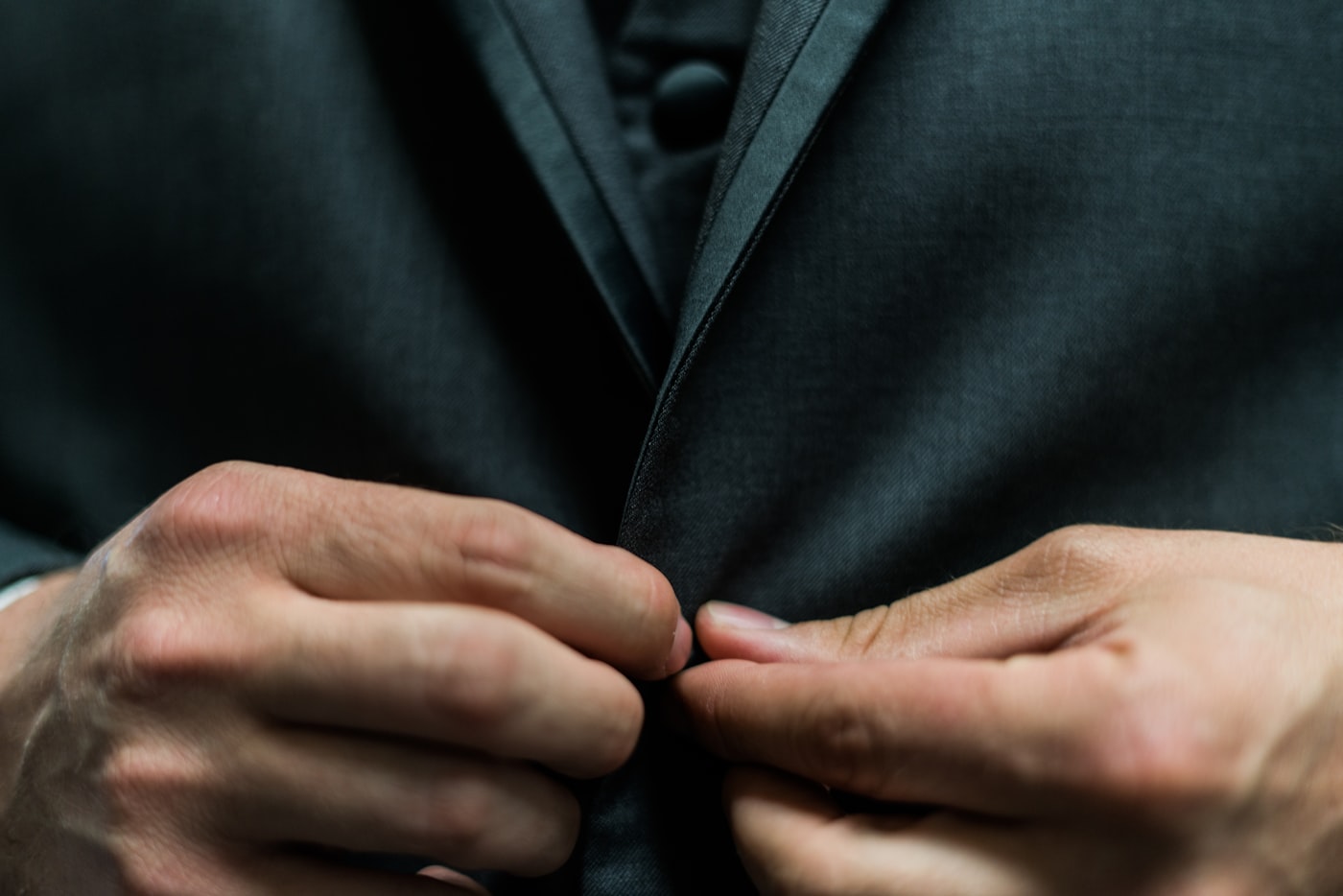
This is also why fit is the most durable investment you can make. Trends move; your proportions don't. A jacket cut correctly for your frame will look considered in five years, when this season's silhouette looks dated.
Start with what you already own
So before the next purchase, do the boring, high-return thing. Pull out the two or three garments you actually wear most, and take them to someone who can make them sit right. Fix the fit you have before you buy a fit you don't need. Almost every man is one tailoring pass away from reading a level more senior — and he is standing on the raw material already.
The hard part isn't the alteration. It is seeing your own silhouette clearly enough to know which inches to change — most of us have simply stopped noticing how our clothes sit. If you want that read done properly, a Loupe assessment measures your fit, proportion and presence against the science of first impressions, and tells you exactly where the highest-return changes are. Then you spend the small money in the right place, once.
See how you actually read
Loupe scores your fit, colour, presence and wardrobe against the science in this piece — and tells you the one move that shifts the room.
Get your Loupe Score